
#9 - Building for impact
in the pursuit of growth, many startups start building for themselves vs the customer, which hurts them in the long term. Sometimes even fatally.
When was the last time you saw a slack post about a new feature being released that got lot of reactions and celebratory comments but to never hear about it again.
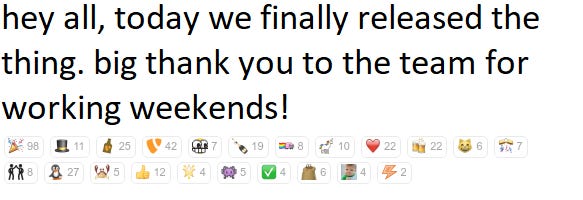
In my experience of over a decade of having seen companies of various sizes, I have noticed a trend. In the pursuit of growth, many startups start building for themselves Vs the customer, which hurts them in the long term. Sometimes even fatally. The focus shifts from user benefits to either adding features one after the other or targeting a specific positioning. This manifests in the form of “we want to be X company”, “we need to add [new hottest trend] to our product”.
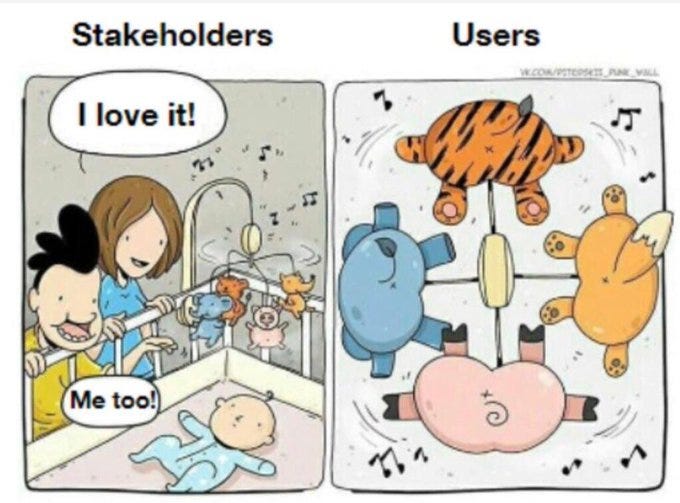
Many startups as well as big companies fall in the trap of focusing internally while having low focus on the actual customer or customer experience. This usually occurs when the needs of the business are not clear and leaders fall into the trap of pleasing the executives or the CEO. Companies and Startups that optimize for impact avoid this by focusing more on the outcomes than celebrating output. Companies that fall into the trap of appeasement grow farther from the customer experience and start building stuff to pacify internal stakeholders and company dialog.
At the end of the day, building for impact looks very different from building for appeasement. There are clear signs that can help you identify this pattern.
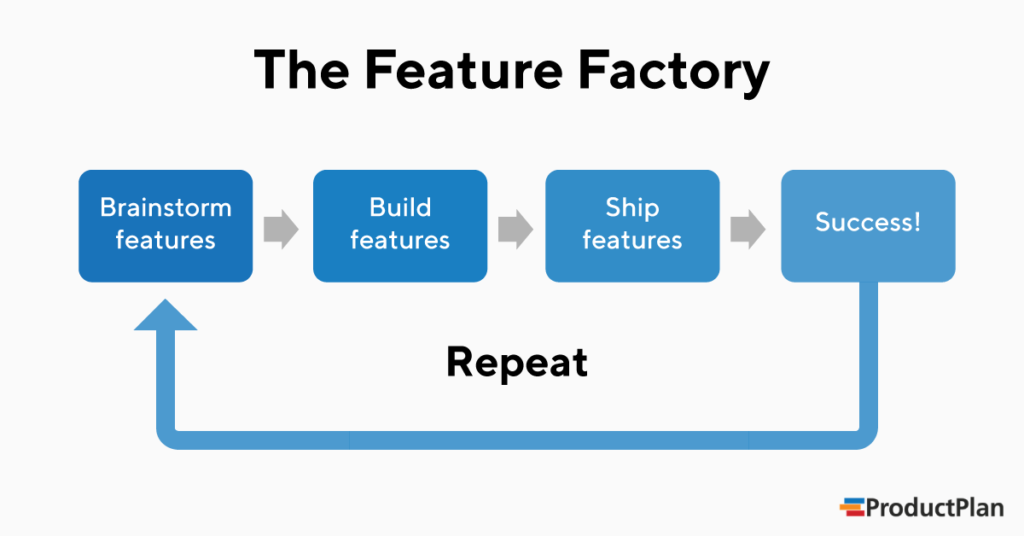
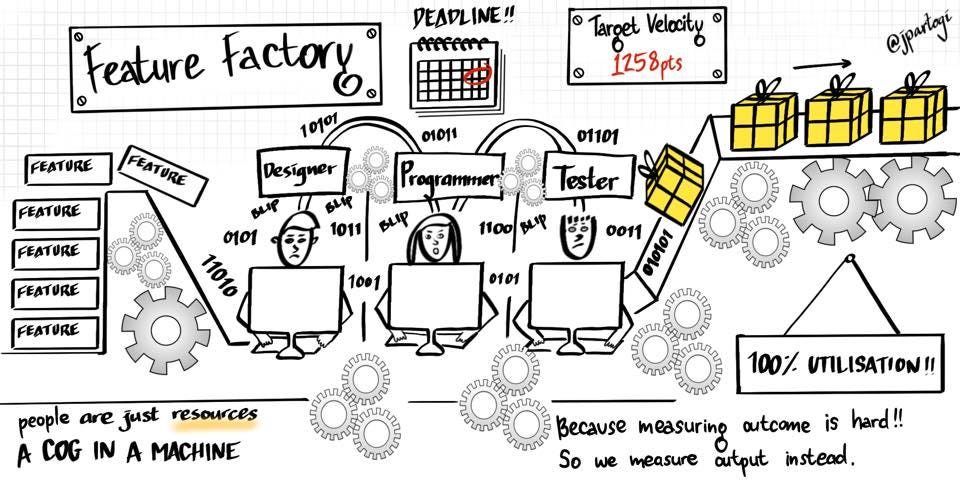
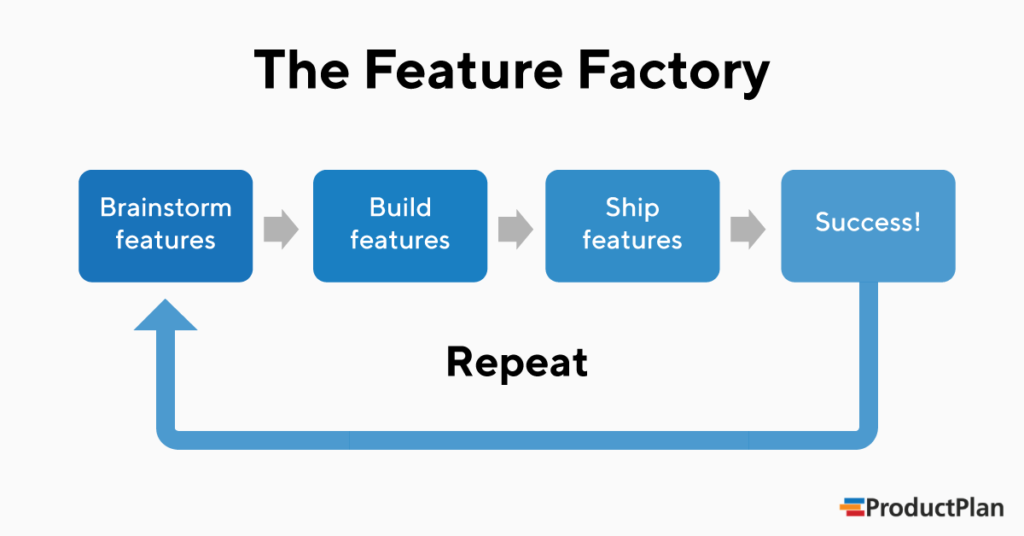
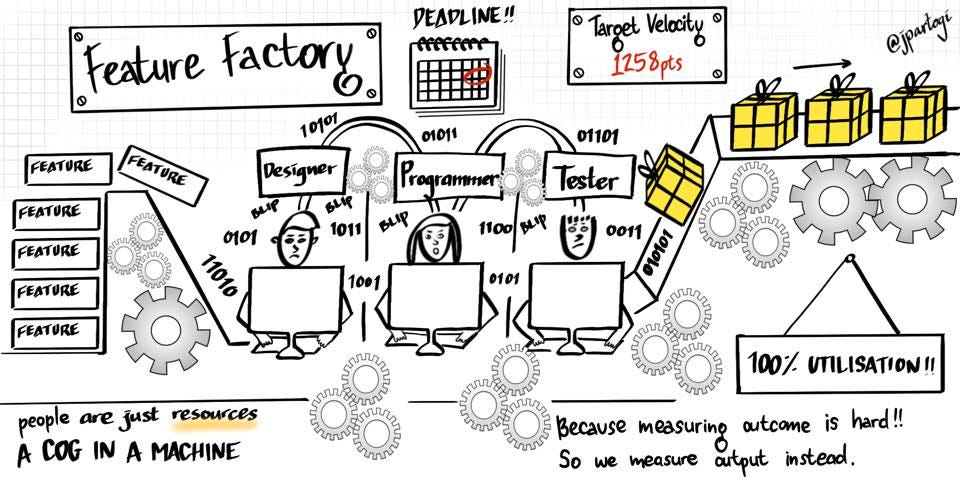
The Feature Factory - One big symptom of this phenomenon is when a startup or a company goes on to release several new features without adding any depth to the previous offerings. These companies follow the pattern of a “feature factory” in which the focus is on doing more stuff especially the next thing rather than analyzing what happened with the previous thing and iterate on it. A waterfall approach to development gets applied where there are no conditional paths on the roadmap based on the metrics from the previous launch or even customer feedback. Customer feedback can become a focus if the company is in the habit of appeasement as that one customer comment that the CEO noticed will be handled on priority even if the other issues impact 10 times the customers. In its simplest form, this is the pattern that you will see at these companies.
Output as Milestones - The lack of outcome oriented strategy leads to the teams optimizing for output as “how fast” something was done gets applauded while ignoring if it needed to be done at all in the first place. Teams keep building while the business keeps losing steam. Product lines are retired and the only reason that’s given is “it didn’t work but we are going to build the new shiny object”. As the management guru Peter Drucker has said “There’s nothing so useless, as doing efficiently that which should not be done at all.” Things said commonly in these environments are “only if we had more people”, “we really need to hit the [arbitrary] deadline”, “we need to build faster”, “everyone is so busy”… and so on.
Competitor Complex - And then there is the mythical competitor that the CEO or founder is obsessed with. It is brought up on the daily that we need to follow their strategy but any counter points are not entertained. The strategy starts getting impacted by the final output seen from that company without knowing what they used to make the sausage or what went into making their sausage special that the customers liked. This plays out in everyday discussions as well as planning sessions. Leaders in the company start borrowing directly from the competitor’s public strategy to get their plans approved and to be liked.
Lack of data informed decisions - Data plays a critical role in taking companies from being optimized for appeasement to being optimized for impact. The reality is building software products without appropriate data analysis is akin to driving a car with a blindfold on with the milestones being reaching the next stoplight. Will you get to some place? Maybe. Would you crash? Maybe. Would you reach your destination? Maybe but the chances are pretty low that you will arrive at your destination unscathed and on time. The reason I use the driving with blindfold analogy is because when you drive with a blindfold, the only data you can collect is how much distance you traveled and if you make it to the next stoplight or not. The lack of data for user behavior results in the company only focusing on lagging indicators like total acquisition, total retention, total churn, etc. So, if there was a crash during the journey, we will only know because we didn’t reach the next stoplight but be blind to the reason of the crash.
so what gives? Understanding the situation in real-time is key so that you can move your vehicle accordingly or switch lanes if your lane is stuck. This can be made possible by digging into the customer journeys to find pain points and building features to solve those pain points. This also means in understanding which of the features are loved by customers and which have not found PMF. Overtime, the focus on the customer behavior through data can help experiment new features and save further investment that doesn’t get traction with the customer. A/B or multivariate experiments is how you can go about this but that will be a detailed essay on its own, so I am not going to get into it here.
Building for Impact
The truth is that diagnosing the environment of the symptoms mentioned above is the key. Once the diagnoses is done and important stakeholders agree that things need to be changed up, an outcome oriented strategy needs to be followed as shown below:
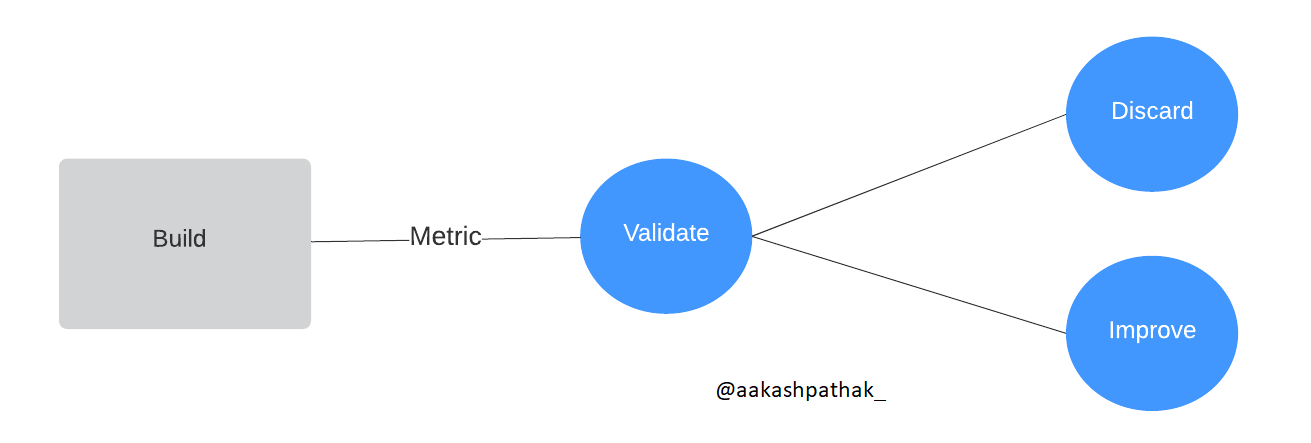
Plan new features & projects as MVP > V1 > V2… and so on
Decide on a north star metric to judge the success/failure
Plan for local metrics as well as global metric
e.g. Local metric - landing page conversion, Global Metric - overall new customer conversion % and #
choosing the right North Star Metric isn’t easy and requires thought. This essay by a16z can help you understand the nuances.
THIS IS THE MOST IMPORTANT STEP - choosing a wrong metric to optimize for is as bad as not using data at all
Validate the MVP - analyze all the data, discuss results with stakeholders and make a decision
Discard or Improve - you make a decision on either to continue development and testing on this concept or move on to other ideas
Note: Ideally the roadmap is optimized for impact and has the ideas that the team thing will generate the most business value but if that is not the case at your organization, please do that before building anything.
Key Takeaways
This approach protects you against going down a path that ultimately is not desired by the customer by having explicit checkpoints at each milestone.
This approach also allows you to detach ideas from each other and choose different North Star Metric for different ideas and different teams focusing on different parts of the customer journey. Data associated with user behavior is the key here and making sure that the focus is on the right part of the customer journey.
This approach also helps in setting up teams that can work independently towards their team’s goal that rolls up to the ultimate company North Star Metric. e.g. One team in AirBnB can only focus on increasing the number of available homes while another team can focus on increase new customer conversion as both of these metrics are key inputs in the ultimate company North Star Metric of “Nights Booked”.
This approach allows understanding the factors of success so a playbook can be formed for successful repeatable processes and ideas.
This approach allows the teams to center their discussions on the outcome as it relates to the customer than any other interpersonal politics or power dynamics.
Best of it all, this approach allows you to build a successful product that the customer loves!
I will close with this quote by Michael J. Mauboussin (author of “The Success Equation: Untangling Skill and Luck in Business”)
“Your only chance of winning is to adhere to the rules that you know work. Your skill can't change the odds, it can only be applied to make sure that you play the cards properly.”
ok I lied, one more…
“There's a quick and easy way to test whether an activity involves skill: ask whether you can lose on purpose.” ✌️
I love you all, keep going!
- Aakash
@aakashpathak_